Half a Victory
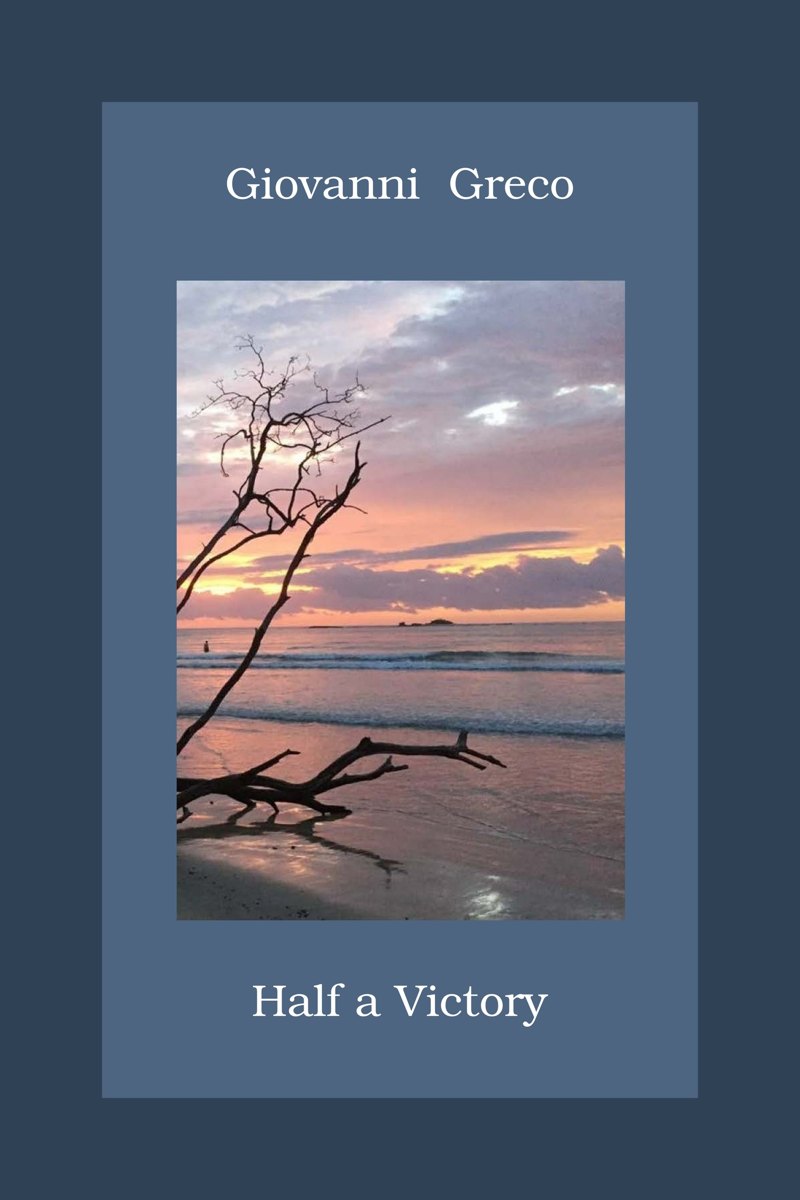
A novel set in Tamarindo, Guanacaste.
A season in Tamarindo: a love pursued, a village on the ocean and the people who live there. Told as a diary by an Italian poet who has been coming back to Tamarindo for years, it is a portrait of the village, its beaches and its people.
Translated from the Italian by Jacqueline Michell. Paperback and Kindle editions.
Read the first chapterAlso available in Spanish (Una media victoria) and in Italian (Una mezza vittoria).
I · Cuando llega, llega
Read the first chapter · Half a Victory
I arrived at the Labrador, the resort where I’d be staying, around a quarter past one. Álvaro welcomed me warmly, and in his smile I could read the joy of seeing me again. He mentioned that I was early: the bus from San José is famous for its cuando llega, llega philosophy — when it arrives, it arrives. Usually it shows up around two, if things go well. If it runs into roadwork somewhere, it can slip to three, or even four.
We exchanged a few words, then I asked him about Marzia, who was nowhere to be seen. He told me she’d gone to Managua to renew her passport, taking the opportunity to drop the children off with their grandparents; they’d be back in a few days.
He went inside and got the keys to the gate and the front door. He handed them to me and then, with the helpfulness that defines him, offered to carry my suitcase, walking me to the apartment — the same one as last year, as I’d specifically requested. Once we reached the doorstep, I thanked him, and he went back to his work.
Inside, I slipped off my shoes and collapsed onto the bed. Finally in Tamarindo, I thought, tired but content.
I was about to give in to sleep when I changed my mind and got up instead. I opened my bag and pulled out my clothes: T-shirts, shorts, Bermuda shorts, two pairs of flip-flops, and one pair of sandals — you don’t need much else here. I’d also brought three pairs of long pants and a few short-sleeved shirts, for more formal evenings.
Once my clothes were put away in the wardrobe and my suitcase placed on top of it, a refreshing shower woke me up. I lay back down, but soon enough I thought it would be a shame to miss the sunset — the atardecer, as they call it here. The Labrador is just over a five-minute walk from the shore.
Along the road, a small thing happened that warmed my heart: the unexpected greeting of a young tourist couple carrying surfboards under their arms. It reminded me that in Tamarindo it’s customary to greet people when you make eye contact, even with strangers. It’s an unwritten law, a silent code that I believe holds true across all of Costa Rica, at least in the places I’ve stayed: Sámara on the Pacific and Puerto Viejo de Talamanca on the Caribbean coast. Sometimes a barely sketched smile is enough, a slight wave of the hand, a nod of the head — and it feels like you’ve known each other forever. A sense of belonging I’ve always deeply appreciated.
In Tamarindo, even solitude connects people. It’s never isolation: it’s a collective breath, a secret shared among those who have chosen to listen to the sea instead of the noise of the world.
Reaching the beach took my breath away.
The sea. The sand. The waves.
For a moment I had the impression that the seven months spent in Italy had never existed. That stretch of time, which during my stay back in the Bel Paese had felt like an eternity, had melted in an instant, as if I’d watched a sunset from the shore just the day before.
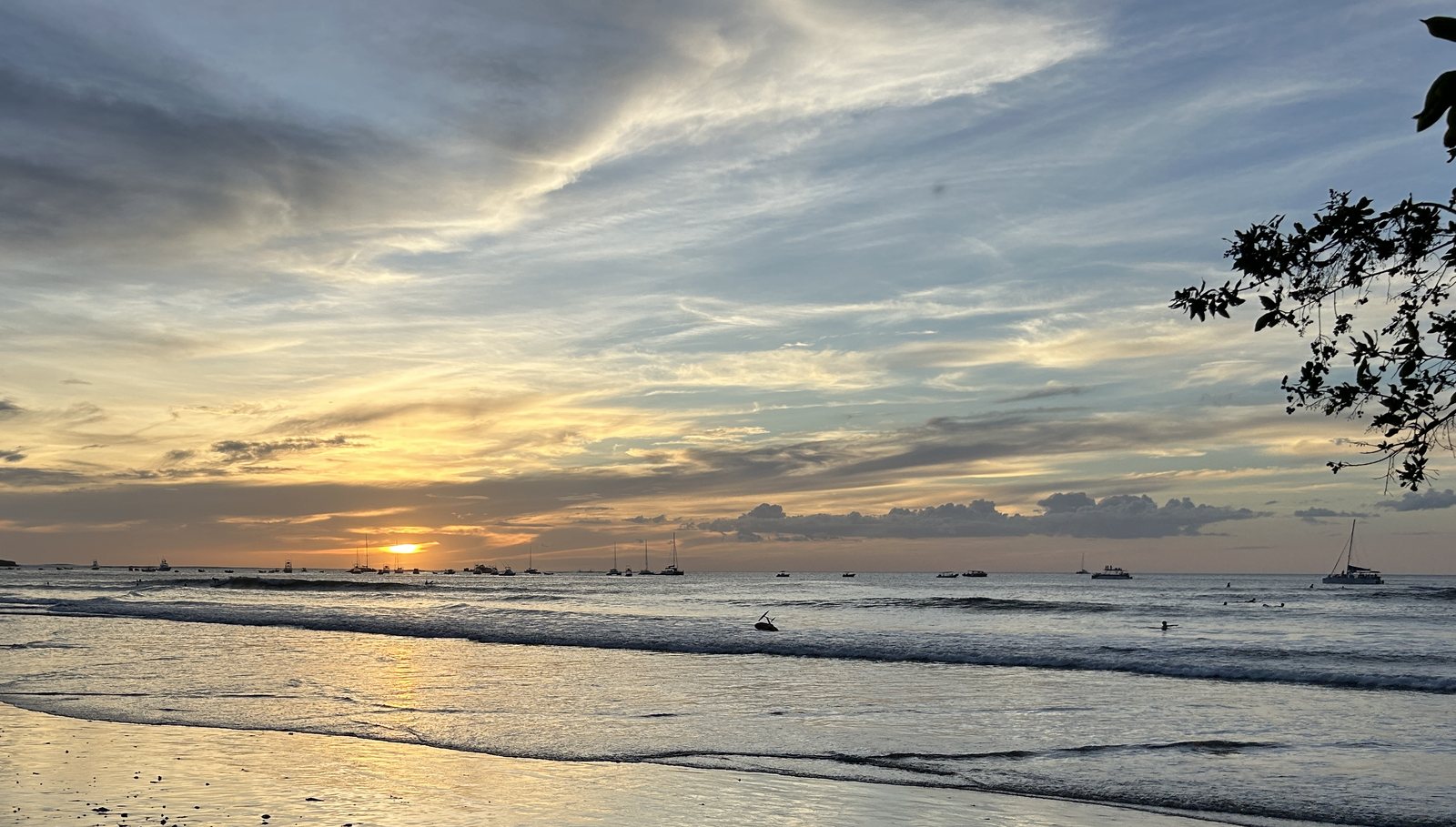
I walked south, toward the San Francisco headland, about a kilometer from town. I stopped just before reaching it: at sunset the atmosphere there is unlike anywhere else. The sky meets the sea along a line that seems to dissolve, and the sound of the waves wraps around every thought like a blanket.
After the sun had slipped into the Pacific, with a veil of melancholy but a full heart, I slowly made my way back home. Another sky on fire etched forever in my memory.
I should clarify — for anyone who doesn’t know me — that this touch of melancholy isn’t a negative feeling to me. As a poet, I often find it the most fertile of companions.
Along the way I stopped at the parking lot near the Chiringuito, a beach bar-restaurant run by my French friend Franck. There I ran into Óscar. I hadn’t seen him on my way out because he wasn’t by his tree, though I had noticed the empty chair and the backpack hanging from a branch, faithful sentinels of his presence.
We greeted each other affectionately. He asked how long I’d spent in Italy. When I told him we hadn’t seen each other since the end of March, he shook his head: it didn’t seem possible that so much time had passed. As we talked, we watched the sea. The sky was darkening fast — here, so close to the equator, there’s none of the long twilight you get in northern latitudes. The sun sets and within half an hour it’s pitch dark. Only a thin red line remained on the horizon, where the sun had just vanished, with the first stars timidly taking their place.
Óscar is Nicaraguan. Like many of his countrymen, he left the poverty of his homeland in search of a better future. The men often work as bricklayers; the women in restaurants or as cleaners in hotels and private homes.
My friend is no longer young. He’s slight in build, with hair that’s gone almost white but is still thick, and a mustache where a few dark strands survive. He’s a modest, courteous man, known and well-liked by everyone. Since he can’t do heavy work anymore, he invented the role of parking lot guardian for himself: he makes sure no one touches the cars parked in the shaded lot near the Chiringuito. When drivers are about to leave, he approaches discreetly, as if to say under his breath: I’ve kept watch over your car — if you’d like to leave me something, I’m here.
Never pushy.
If he gets a little change, he thanks them with a bow — but he does the same for everyone, whether they leave something or not. I’ve rarely met someone with that kind of humility and grace.
After saying goodbye to Óscar, I stopped by the market for a few things. One of the cashiers recognized me and looked up from the register with a kindly expression. “Good to see you again!” She added how happy she was that I was back. I bought only what I needed for dinner and breakfast the next morning, then headed back to the resort.
Among the things I love most about Costa Rica is its tropical latitude: it’s never cold, which for someone who feels the chill as easily as I do is an immense relief. I remember, during one of my first trips, in a hotel in San José, trying to close the window before going to bed. There was no actual window frame to speak of — just a screen and a curtain. Someone explained to me that in Costa Rica you could go your whole life shirtless: if you don’t want to be judged for how you dress, coming here solves the problem.
For dinner I had nuts, crackers, and avocado, my eyes already drooping with exhaustion. I didn’t even wash the plate. By around nine I was asleep.
I woke up at four and couldn’t get back to sleep. At five, after an hour of drifting in and out, I got up. I ate a banana and drank a glass of water. By five-thirty, I was on my way for a morning walk to the beach.
In many places in the world, the streets are deserted at that hour. In Tamarindo it’s different: given its location, dawn starts breaking around five and there are already people at the shore. Nature wakes at the first light and invites you to do the same. Here it makes sense to follow the sun’s rhythm — rising when it rises, resting when it sets. It’s a return to an older wisdom, to that connection with the land that modern cities have stripped away from us.
Back from the beach, after a shower and breakfast, I decided to take a walk, hoping to run into a friend. I’d gone barely a hundred meters when a red pickup truck, coming from the opposite direction, slowed to a stop. It was my dear friend Sara. She rolled down the window.
“Wait while I park up ahead!” she said, with a smile that gave away all her joy. She drove another twenty meters or so and pulled into a gap, without blocking traffic.
I caught up with her as she was getting out of the car. We hugged and exchanged a few words, but only briefly: she had an appointment with someone we both knew.
Sara deserves a chapter all to herself. In Tamarindo she’s an institution: everyone knows her and everyone adores her for a rare gift, one that’s almost impossible to learn — she knows how to make people love her. She helps you of her own accord, without waiting to be asked; she dispenses wise advice with disarming ease. She knows every detail of local life as if Tamarindo were the village where she’d grown up.
Italian-born, she’s lived here so long that her Spanish is flawless, seasoned with local expressions that make her sound like a native. She arrived in Tamarindo in the early nineties with her boyfriend at the time; they split up soon after. Letting a woman like Sara slip away was a mistake he would carry with him for the rest of his life.
She’s still striking, even as she nears fifty. Her black hair, with a few silver threads running through it, makes her more elegant, not less. Her brown eyes have the warmth and intensity of Costa Rican coffee. She married Ezequiel, a gentle-souled Argentinian, in 2001, and together they’ve built a life that’s calm and full.
I remember Tod introducing us on my first trip. It didn’t take long for me to fall for her — or at least, I believed I had. I’d misread her manner, that natural sweetness and warmth of hers. I thought I was special in her eyes; after two or three days I realized she was like that with everyone. She calls everyone “¡Amor!” the way other people use filler words. If I were Ezequiel, it would bother me — but I suppose with time you get used to sharing that kind of light.
I’ll have more to say about Sara later.
We said our goodbyes with a promise to meet again at the Cala Luna, our usual spot on the beach.
I also went to the phone shop — a small concrete building painted blue, with the national carrier’s sign standing out on the front. I was hoping Marzia had remembered to make the minimum top-up of five hundred colones every three months needed to keep my SIM active and hold on to my old number.
The owner, a tico — the local term for a Costa Rican — whom I’d known since last year, wasn’t there. During my previous stay we’d bonded over a shared passion for Hemingway — one of those encounters you remember. In his place were two new employees. The younger one swapped the SIM with practiced ease, then dialed his own number from my phone to check it worked: his cell phone rang.
Well done, Marzia.
The remaining credit was just over two thousand colones. The young man had been so kind that I didn’t have the heart to leave empty-handed: I topped up with five thousand colones and left a small tip.
Outside the shop I called Tod. He was happy to hear from me and already knew I’d arrived. He told me, though, that we couldn’t meet that day: he had to take the car to the mechanic, then he’d be in Villarreal — a town four kilometers from Tamarindo — for other errands. We arranged to meet in the next few days.
With nothing else planned, I set off on a long walk along the beach to the mouth of the Matapalo River, which marks the edge of Playa Grande. I was hoping to cross paths with some old acquaintances among the boatmen.
Unlike the river mouth to the south — the one at Playa Langosta, which you can wade across at low tide — the one to the north absolutely requires a boat, because of the strong currents and the depth of the river. There are always boatmen ready to take you across: for five hundred colones or a dollar, you are on the other side in under a minute.
Playa Grande stretches for about three kilometers, and at low tide it widens to forty or fifty meters. It’s the perfect place for anyone who loves walking along the shore letting their thoughts drift, accompanied by the murmur of the waves, birdsong, and the sea breeze — called viento del mar here.
When I reached the estuary, I found only two boatmen: Henry and a young man I’d never seen before. As soon as he recognized me, Henry smiled, and his first words were: “You promised you’d come back!”
“That I did.” I shook his hand.
We chatted for a few minutes, then I left them to their conversation and went to sit under my usual mangrove.
River tours leave from the estuary: inland excursions organized by tourist agencies, lasting a couple of hours, winding through tributaries and side channels where it’s easy to lose your way. The boatmen aren’t just skilled navigators — they’re naturalist guides, able to spot and explain every plant, every flower, every bird or animal sighted along the way. During my previous stay I’d taken one of these excursions myself, for twenty dollars. There was only a young Dutch couple with me.
It had been a fascinating trip: white herons standing motionless in the shallow water like stone statues; kingfishers diving like blue arrows; green iguanas stretched out on branches in the sun with the regal indifference of ancient reptiles. At one point we’d heard the howler monkeys’ uproar in the distance — a sound you don’t forget: it’s like a dinosaur’s roar and can carry up to five kilometers away.
And yet I have to admit I prefer walking alone on the beach. I’m contemplative by nature; I need silence to reflect on existence, on the meaning of things, on the beauty around us. My Dutch companions, on the other hand, had been thrilled the whole way, photographing every moment of the trip — and good for them. Everyone finds their own way of inhabiting the world.
I’d barely sat down when I saw her, on the far bank, perched on a tree trunk the tide had washed up onto the sand.
It almost seemed as though she’d been waiting for me — I don’t know if she does it on purpose or if it’s just my imagination looking for confirmation — but the frigatebird was there, motionless. Wings folded, long forked tail, black feathers with that green and violet sheen that shifts depending on how the light falls, beak curved like a fish hook. Fregata magnificens, for those who like scientific names, though no one here in Tamarindo calls her that. To everyone she’s simply the Sky Pirate, because she steals food from other birds mid-flight, snatching it straight from their beaks with a precision that’s both cruel and beautiful. If she can’t rob them outright, she harasses them until they drop their catch — then she dives and seizes it before it hits the water.
There’s something paradoxical about her condition. This bird lives above the ocean but can’t dive into it: she has no waterproof plumage, and if her wings touched the water, she’d never fly again. The ruler of the ocean can’t touch her own kingdom. To survive, she has to make a virtue of necessity — living off what others have caught, feeding on what she steals. What a mocking fate, and what a quiet lesson for anyone who knows how to listen. She’s a creature condemned to eternal vigilance: even when she dozes, suspended in the sky, only half her brain shuts down, leaving the other half standing guard over the wind and the horizon. She knows nothing of sleep’s full surrender, just as she knows nothing of the water’s embrace.
Legend has it that frigatebirds are the souls of sailors lost at sea, doomed to wander the skies forever without rest. Their cries are said to be echoes of old sailors’ songs, and every time they scan the horizon, they’re searching for ships laden with treasure. They can fly for days without tiring, masters at riding thermal currents with barely any effort, artists of the air who never seem to hurry yet never stop. Sailors of old, watching them cut through the sky with such agility and daring, could do nothing but give them the name of their own swiftest ships — the frigate. With a wingspan of over two meters, she’s a black sail unfurled against the blue, light as a sigh and deadly as a blade. I sometimes wonder if they think about their own condition — if there’s room, in that small skull of feathers and bone, for something resembling awareness. Whether, looking at other birds, they think: To you Mother Nature gave waterproof feathers, to me speed. To you the chance to plunge into the sea, to me the power to rule the sky. Perhaps it’s in this very limitation that their greatness lies: forbidden to touch what they love, they’ve learned instead to master it from above. I find myself reflected in this tireless voyager of the sky.
I too have to stay constantly aloft to avoid sinking into the sea of conformity. I too live on the margins of a world I don’t fully belong to, brushing against things without ever grasping them, watching from above what others inhabit so naturally. I don’t know if it’s a curse or a privilege. Probably both, as is so often the case with the truths that matter.
The first time I noticed her was in the summer of 2000. I’d gone with Tod to watch the sunset from the headland, and at one point he’d raised his arm, pointing at something above us. I said nothing. I stood still, head tilted back, admiring her full wingspan, and for one endless minute I forgot to breathe.
She’s been my favorite bird ever since.
I saw her again last year too — only once.
I don’t know if it’s the same individual — ornithologists would tell me there’s no way to know, that frigatebirds can live up to twenty-five years, and that telling one apart from another takes years of field study. But I’m convinced it’s her. That she recognizes me. That she knows, in that mysterious way certain animals seem to sense things, that after seven months I would reappear — my heart full of hope.
Here I am, I thought. I’m back.
As if she’d heard my thought, the frigatebird tilted her head slightly, fixing me with a gaze that seemed to exist beyond time. Then, with one slow, solemn beat of her wings, she lifted off the trunk. There was no effort in the motion, only a surrender upward. She caught an invisible current and began drawing wider and wider circles, becoming a dark shape against the blue, until she was nothing more than a single point suspended between the sea and infinity. She was gone, but I felt she’d left me her permission to stay.
I stayed there with my thoughts, watching the sea for about an hour. Then, calling out a hasta la próxima vez from afar to Henry and Ramón — the young Nicaraguan who’d recently started this new line of work — I set off toward town.
When I was almost there, two women sitting on the sand waved to me. At first I didn’t recognize them; only as I got closer did I realize they were Diana and Letizia. Their hairstyles, different from what they’d had last spring, had thrown me off. Besides, I’d never seen the two of them together, and I didn’t even know they were friends.
Diana is a beautiful American woman in her fifties, with brown hair the tropical sun has lightened over time, and that deep gaze of someone who knows life is only worth living fully. She works at a real estate agency that handles luxury properties for North American clients. She’d lived with Pio — a friend from Naples who’d left Milan for a more authentic life in Costa Rica — until his death in 2017. I’d met him in 2000, back when Pio was still with Laura from the Arco Iris.
Letizia is my hairdresser: a delightful woman who, though approaching forty, has kept a youthful look and an infectious liveliness. Sicilian by birth, raised in Switzerland where her family had moved in search of work, she has that particular elegance born from the meeting of Mediterranean passion and northern restraint. She’s lived in Tamarindo with her boyfriend for four years.
After the usual pleasantries, Letizia told me I absolutely couldn’t miss the book launch of Diana’s poetry collection, dedicated to Pio. It would be a special occasion. I had no idea Diana wrote poetry too.
A lovely coincidence indeed.
I accepted right away: I wanted to read her verses, and besides, occasions like these are the best way to meet interesting people. Above all, I was hoping to find Fanny, a Swedish photographer I’d met during my previous stay. It would be nice if she were back at the travel agency where she’d been employed the year before... but that’s another chapter.
The launch was set for the following Saturday at eleven, at Tamarindo’s only bookstore: the Bookstore of the Waves.
Letizia also told me she’d moved her beauty salon to her house and now only cut hair by appointment. She gave me the address and invited me to stop by whenever I wished, to see her new workplace.
But now that I’ve mentioned Laura from the Arco Iris, I feel the need to digress and tell you about four friends who were part of Tamarindo’s history — and mine.
In January 1993, Tod and his friend Steve — along with Steve’s girlfriend, Simona, and her sister, Laura — after a few exploratory trips to Costa Rica, decided to move to Tamarindo for good. Tod had sold his car and, with his severance pay and some savings, managed to gather what he needed for that gamble.
They built the Arco Iris resort: four cabins, private living quarters, and a strictly vegetarian restaurant, true to Simona’s beliefs. At the center of the property stood a dojo — Japanese for “training hall” — devoted to yoga and karate, the latter a discipline in which Tod and Steve both held black belts. Every morning at six they taught yoga classes open to anyone: tourists, locals, expats. The Arco Iris quickly became a landmark for people seeking balance between body and mind, far from standardized tourism.
For about ten years it worked well. Word of mouth did the rest, and you often had to book well in advance.
In 2003 they sold everything. Simona and Steve had split up, and with them went the balance that had held everything together.
“It was inevitable, in a way,” Tod explained to me one day. “When you live and work together twenty-four hours a day, personal dynamics turn explosive.”
And then: “The Arco Iris was like a seed. It gave rise to other situations, other stories. Sometimes things don’t go the way you planned — but that doesn’t mean they go badly. It just means life has different plans for you.”
Steve met Nancy, an American girl, and married her not long after. They now live with their teenage son in Malpaís, at the tip of the Nicoya Peninsula.
Some time after her separation from Pio, Laura returned to Italy and began a new life: some loves last exactly as long as they were meant to.
After lunch and a bit of rest, I headed to the headland in the late afternoon. At low tide, that stretch of rock is my favorite spot to bid the day farewell. From there the Pacific looks even more immense, the view is breathtaking, and the setting wraps around you completely — the dark rocks, the retreating sea, the sky changing color like a canvas being painted in real time.
I noticed someone sitting among the rocks, in my usual spot: it was Tatingo. His slim silhouette was unmistakable, hands clasped over his knees.
“I was waiting for you. Sara told me you’d arrived,” he said by way of greeting.
Tatingo is one of the many friends I have in Tamarindo — someone who comes to the beach looking for what the town itself can’t give him: the silence he needs to find his way back to himself.
He told me he’d been let go from the market where he worked as a baker. A demanding job: starting at three in the morning, finishing at nine. He didn’t seem particularly upset about it. He’d found new work as a handyman for an elderly American woman: looking after the house, the shopping, the garden upkeep. Room and board included, and he says he earns decently.
He’s young — I don’t think he’s thirty-five yet. Thin as a reed, originally from a town nearby, where his elderly mother still lives; he visits her every other weekend.
We talked for about ten minutes, then he headed back to town without waiting for the sunset.
He’d come to the headland just for me. Not for the sunset, not for the sea. Just to renew our friendship, with the simplicity of someone who knows that real gestures don’t need explaining.
Thank you, Tatingo.
As the tide pulls back, on certain evenings I stay on the beach until half past six, until the light in the sky finally gives way to the stars and the moon.
Here the stars seem closer. You almost feel you could touch the sky with your hands — in reality, they’re simply brighter: the absence of light pollution makes them sharp, alive, present. You can see thousands of them. Constellations that are invisible ghosts in industrialized cities shine here in their full ancient splendor.
Costa Rica is a strip of land squeezed between two oceans. The air is healthy, light, clean. And yet the sky is even more spectacular on cloudy days: I’m captivated by watching it painted red by clouds still lit by a sun that’s already set — as if the day refused to fully surrender.
Even the moon has a peculiarity here: you can’t tell exactly when it’s full. Elsewhere a full-moon night is unmistakable; here it seems full for three nights in a row. The day before and the day after, perhaps because of how close we are to the equator, the moon looks perfectly round.
Last summer something happened that I haven’t forgotten. One afternoon at the Playa Langosta estuary: the sun was setting in the west while the full moon rose in the east, almost in sync, both the same size. The slightly hazy sky gave the sun a color similar to the moon’s — twin celestial bodies trading shifts across the sky.
I love staying on the beach until twilight has fully burned itself out, down to its last sliver of light.
I’ve learned to check the tide chart on my phone the way you’d check a train schedule: it tells you where the waves will reach, because at high tide the beach narrows and the space to stay, to think, to do nothing, all but disappears.
The sea has its own schedule, and it’s one you can’t bargain with. It goes out for about six hours, then comes back, shifting a little later each day than the one before — an hour or so, give or take. So if low tide hits its lowest point at nine in the morning today, tomorrow it won’t arrive until ten. A cycle that closes and starts over every lunar month, constant, indifferent to everything else.
At first it felt like a nuisance, one more calculation to make before leaving the house. Then I understood there was no choice: here it’s nature that sets the schedule, and the only sensible thing to do is learn to read it. Over time, I realized it isn’t even hard. If anything, there’s something reassuring in knowing that, every day, something in the world moves exactly as it should.
As you’ve probably gathered by now, the beach is the center of my day. When I feel like it, I head out at dawn to walk, swim, or exercise. Otherwise, around eight or eight-thirty, I set off toward Playa Langosta or the Playa Grande estuary. Once or twice a month, early in the morning, I cross the Matapalo River estuary by boat and reach Playa Carbón, past Playa Grande and Playa Ventanas. Last year, on a couple of occasions, I pushed as far south as Playa Avellanas, about a two-hour walk. One day I’d like to make it to Playa Negra — but it’s a venture that needs careful planning: almost six hours round trip; you have to time it with low tide to cross the Playa Langosta estuary on the way there, and calculate your return before high tide closes the passage again.
This contact with nature restores the soul. And I missed it terribly during the fifteen years I worked for a company, sitting all day in front of a screen, in an industrial zone in Buccinasco, south of Milan. I handled documentation and certification. I had many friends among my colleagues, but the place was far from home and the days felt endless.
Thinking back on those gray warehouses while the Tamarindo breeze brushes my face, I understand that I’m not simply in another country: I’ve come back to life. As I look out at the vastness of the ocean, I feel with complete clarity that this is the place in the world where I want to exist.
Enjoyed the first chapter? Keep reading:
About the author
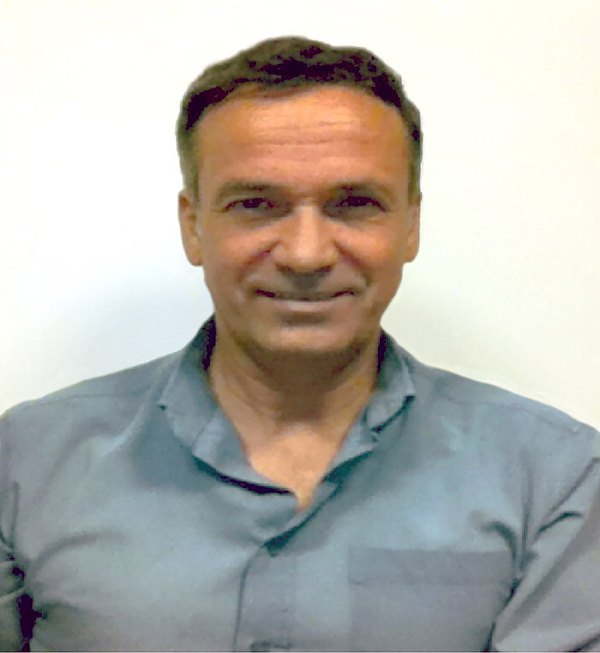
Giovanni Greco is an Italian poet and writer, born in Marcedusa, in Calabria, and raised in Milan. He has published several poetry collections, including Love and Freedom, and for years he has spent long periods in Tamarindo, where this novel was born.