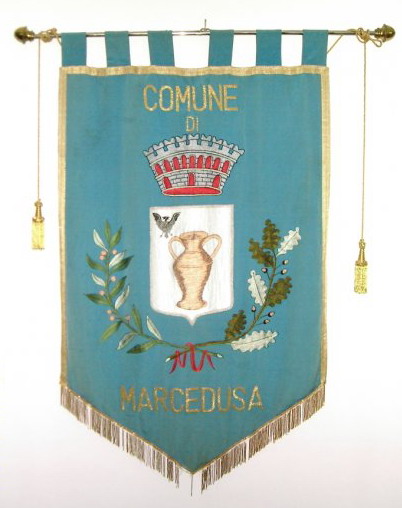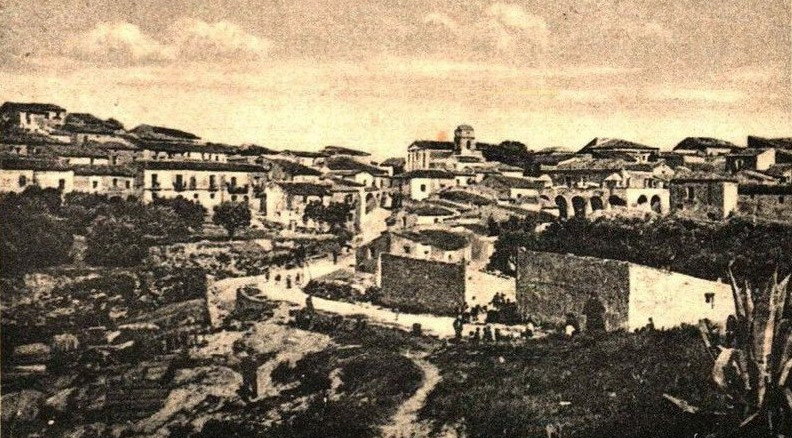
Marcedusa
Breve storiaA short history
Secondo alcuni studiosi, il toponimo Marcedusa deriverebbe dal termine dialettale calabrese marcida, che indica il mirto, assumendo così il significato di «luogo del mirto».According to some scholars, the place name Marcedusa derives from the Calabrian dialect word marcida, meaning myrtle, and thus means “place of the myrtle”.
Il territorio fu abitato sin dall’epoca neolitica e, successivamente, in età magno-greca. Dopo il periodo romano, Marcedusa conobbe il dominio dei Goti, dei Bizantini, dei Normanni e infine degli Svevi.The area was inhabited from Neolithic times and later in the age of Magna Graecia. After the Roman period, Marcedusa came under the rule of the Goths, the Byzantines, the Normans and finally the Swabians.
Le prime testimonianze documentarie certe risalgono proprio all’età sveva: nel maggio del 1225 l’imperatore Federico II di Svevia concesse all’abate del monastero di Sant’Angelo del Frigillo il privilegio di usufruire del sale del torrente Salinello. In seguito il feudo passò ai conti Ruffo di Catanzaro e, nel 1427, al marchese Antonio Centelles, attraverso il matrimonio con Enrichetta Ruffo.The first reliable written records date back to the Swabian age: in May 1225 Emperor Frederick II granted the abbot of the monastery of Sant’Angelo del Frigillo the privilege of using the salt of the Salinello stream. The fief later passed to the Ruffo counts of Catanzaro and, in 1427, to Marquis Antonio Centelles through his marriage to Enrichetta Ruffo.
Fu in questo periodo, nel 1448, che a Marcedusa si stabilì un avamposto di milizie albanesi incaricate del controllo del territorio. Si trattava di soldati arbëreshë, di origine illirica, guidati da Demetrio Reres, generale di Giorgio Castriota Scanderbeg. Furono chiamati in Calabria da Alfonso I d’Aragona, re di Napoli e Sicilia, per reprimere la rivolta dei baroni ribelli guidati dal Centelles e sostenuti dagli Angioini nella lotta per la successione al trono di Napoli.It was in this period, in 1448, that an outpost of Albanian troops was established in Marcedusa to control the territory. They were Arbëreshë soldiers of Illyrian origin, led by Demetrio Reres, a general of George Castriot Skanderbeg. They had been called to Calabria by Alfonso I of Aragon, King of Naples and Sicily, to put down the revolt of the rebel barons led by Centelles and backed by the Angevins in the struggle for the succession to the throne of Naples.
Terminato il conflitto, questi militari ottennero in ricompensa il diritto di insediarsi nelle terre circostanti e l’esenzione fiscale per cinquant’anni. Deposte le armi, molti si stabilirono con le loro famiglie, integrandosi con la popolazione locale e dedicandosi principalmente all’agricoltura e alla pastorizia.When the conflict was over, these soldiers were rewarded with the right to settle in the surrounding lands and a fifty-year tax exemption. Laying down their arms, many settled there with their families, blending with the local population and devoting themselves mainly to farming and sheep-raising.
Nel 1483 Marcedusa passò a Paolo Caivano; nel 1523 sua figlia la portò in dote ad Andrea Caracciolo, marchese di Mesoraca. Successivamente il feudo fu ceduto a Ferrante Spinelli, duca di Castrovillari. A questo periodo, precisamente al 1565, risale la notizia del primo sindaco conosciuto, Minico Taverna, incaricato di vigilare «sul rispetto delle regole e sulle necessità degli abitanti».In 1483 Marcedusa passed to Paolo Caivano; in 1523 his daughter brought it as a dowry to Andrea Caracciolo, Marquis of Mesoraca. The fief was later sold to Ferrante Spinelli, Duke of Castrovillari. From this period, in 1565 to be precise, comes the earliest record of a known mayor, Minico Taverna, charged with watching over “compliance with the rules and the needs of the inhabitants”.
Nel 1585 il territorio divenne possesso dei duchi d’Altemps. Sotto il loro dominio, il 6 maggio 1649, Marcedusa ottenne il titolo di Universitas, divenendo comune autonomo. Gli Altemps conservarono il feudo fino all’abolizione del feudalesimo, nel 1806.In 1585 the territory passed to the Dukes of Altemps. Under their rule, on 6 May 1649, Marcedusa obtained the title of Universitas, becoming an autonomous municipality. The Altemps held the fief until the abolition of feudalism in 1806.
Nel 1809 giunse la definitiva autonomia amministrativa e, per decreto napoleonico, venne istituita l’anagrafe civile.Full administrative autonomy came in 1809, and a Napoleonic decree established the civil registry.
Nel 1931 l’Enciclopedia Treccani, alla voce dedicata a Marcedusa, ricordava come «la comunità albanese si andò spegnendo nel corso del XVIII secolo a causa della malaria», osservando che la popolazione moderna era per la maggior parte originaria dei paesi vicini.In 1931 the Treccani Encyclopaedia, in its entry on Marcedusa, recalled that “the Albanian community died out during the 18th century because of malaria”, noting that most of the modern population came from neighbouring villages.